
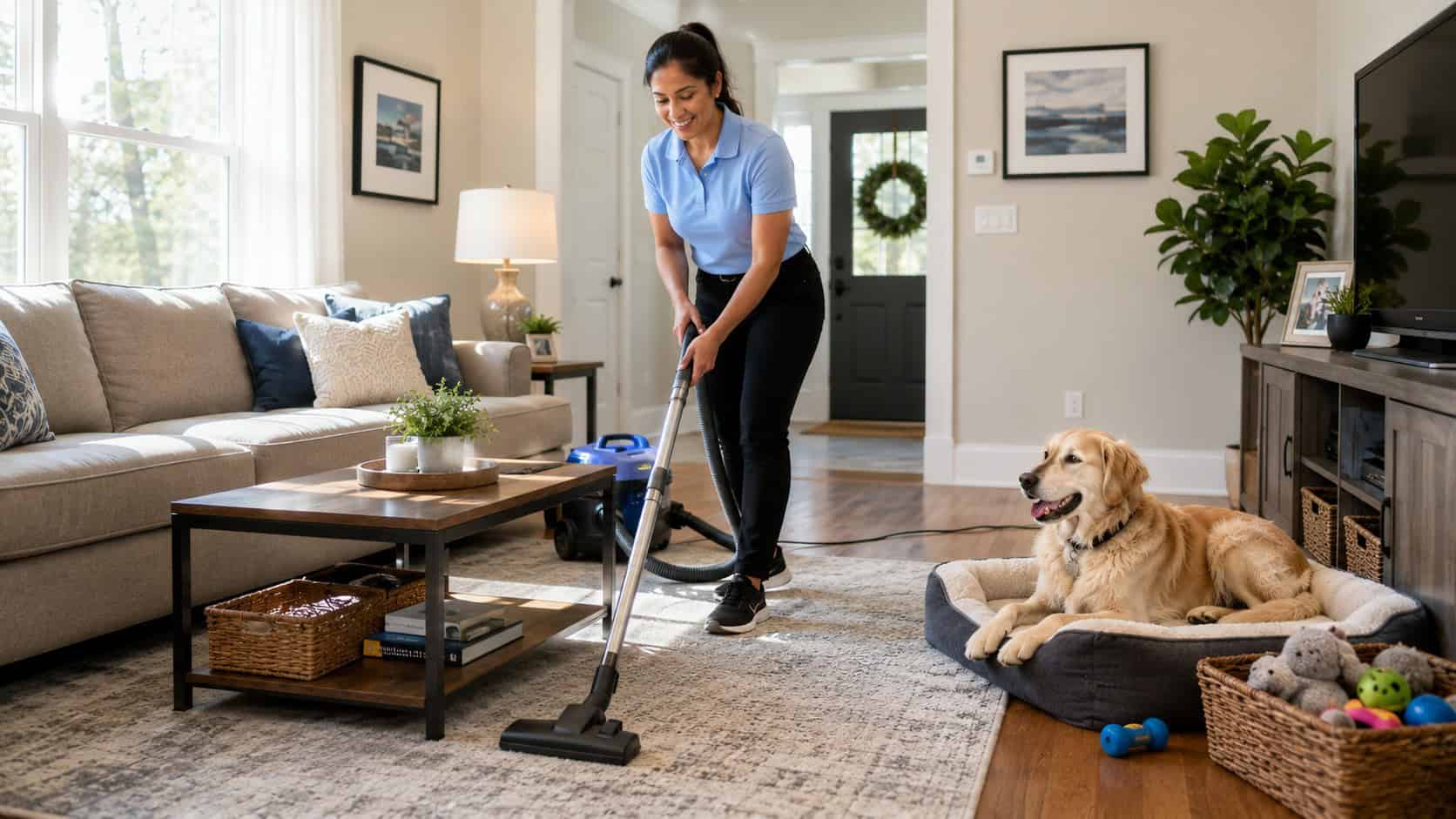
Pets bring companionship, personality, and plenty of memorable moments into a home. They can also bring shedding hair, paw prints, litter tracking, food crumbs, nose marks, dust, and a steady stream of everyday cleanup.
Professional house cleaning for pet owners can make those messes easier to manage, but homeowners often have questions before scheduling. Should the dog be crated? Can a cat remain loose in the home? Will the cleaners vacuum pet hair from furniture? Are litter boxes included? Does having several pets affect the time or price of a cleaning?
The answers depend on the home, the animals, the selected service, and the cleaning company’s policies. Understanding what professional cleaners can reasonably handle, and preparing your pets before the appointment, helps the service run more safely and efficiently.
Quick Answer: How Does Professional House Cleaning Work in a Home With Pets?
Professional house cleaning can help remove pet hair from accessible floors and surfaces, clean paw prints and nose marks, vacuum rugs and carpeting, mop hard floors, dust open surfaces, and refresh kitchens, bathrooms, bedrooms, and living areas. Pet owners should tell the cleaning company about every animal, secure pets that may become nervous or interfere with the work, and clean up litter boxes, cages, droppings, urine, vomit, and similar animal waste before the team arrives.
Why Homes With Pets Have Different Cleaning Needs
A home with pets does not simply become dirty faster. The type and location of the cleaning work can also be different.
Dog and cat hair can collect along baseboards, under furniture edges, on stair risers, around table legs, and in the corners of rooms. Paw prints may appear on hard floors, entry doors, windows, and lower cabinets. Litter can travel well beyond the litter box, while food crumbs and water droplets accumulate around feeding areas.
Pets can also affect how quickly dust and outdoor debris move through a home. Dogs carry dirt, pollen, moisture, and grass inside on their paws and coats. Cats may spread litter between rooms, especially when litter boxes are located near high-traffic areas.
Common pet-related cleaning concerns include:
- Loose hair on hard floors, rugs, carpeting, and stairs
- Hair collecting beneath furniture and around room edges
- Paw prints near doors and across hard flooring
- Nose marks on windows, doors, and lower glass surfaces
- Litter tracked into hallways and nearby rooms
- Food crumbs and water spots around bowls
- Dust collecting around pet beds, toys, and crates
- Outdoor dirt brought into entryways
- Hair and debris accumulating faster between cleanings
None of these issues means a pet owner’s home is unusually dirty. They are normal consequences of sharing a space with animals. The right cleaning schedule simply needs to account for them.
What Can Professional House Cleaning Help With?
A professional cleaning service can handle many ordinary pet-related messes as part of maintaining the home. The exact work depends on the service selected and the company’s checklist.
Pet Hair on Accessible Floors
Vacuuming carpeting, rugs, stairs, and accessible floor areas can remove a significant amount of loose pet hair. Hard floors may be vacuumed or swept before they are mopped, helping collect hair that would otherwise move around the room.
Hair tends to accumulate most heavily:
- Along walls and baseboards
- Under the edges of beds and sofas
- Around dining tables and chairs
- On stair treads and risers
- Near pet beds and favorite resting spots
- In entryways and hallways
- Near heating vents and air returns
The cleaning team needs reasonable access to these areas. Heavy furniture is not ordinarily moved during routine house cleaning, so homeowners should move large objects in advance when cleaning behind them is a priority.
Dust and Hair on Open Surfaces
Pet hair does not remain on the floor. It can settle on shelving, tables, windowsills, furniture, railings, and other open surfaces.
Routine dusting can help keep these areas cleaner, particularly when the home is cleaned consistently. Surfaces covered with paperwork, decorations, toys, electronics, or personal belongings may be difficult to clean thoroughly, so light tidying before the appointment is helpful.
Paw Prints and Everyday Floor Marks
Wet weather, muddy yards, snow, and ordinary outdoor activity can leave paw prints across entryways, kitchens, hallways, and other hard-surface flooring.
Professional floor cleaning can remove many ordinary marks and surface soils. Permanent staining, damaged finishes, deep scratches, discolored grout, and moisture damage may remain even after the surface has been thoroughly cleaned.
Nose Marks on Glass and Doors
Dogs often leave nose prints on patio doors, storm doors, windows, and lower sections of glass. These marks may be addressed when the surfaces are accessible and included in the scheduled cleaning.
Interior window cleaning or detailed glass cleaning may be an additional service rather than part of every standard appointment. Mention it while requesting your quote so the company can explain what is included.
Food and Water Areas
Food crumbs, spilled kibble, water droplets, and residue can collect around bowls and feeding mats. Picking up bowls before the team arrives allows the surrounding floor to be cleaned more effectively.
Wash heavily soiled bowls and feeding equipment separately. Residential cleaning teams generally clean the surrounding household surfaces rather than pet dishes, automatic feeders, water fountains, or specialized animal equipment.
Litter Tracking Around the Home
Professional vacuuming and floor cleaning can help remove ordinary litter tracked into nearby rooms. However, the litter box itself should be emptied and maintained by the pet owner.
Cleaning companies may not handle litter boxes, animal cages, droppings, urine, vomit, or similar biological waste because these materials require different safety procedures.
Best Maids Tip
Tell the cleaning company where your pet spends the most time. A favorite sleeping area, sunny window, staircase, entry door, or section of carpeting may need more vacuuming than the rest of the home.
Which Cleaning Service Is Best for a Home With Pets?
Having a dog or cat does not automatically mean that you need a deep cleaning. The right service depends on the home’s condition, the number and type of pets, how much they shed, and how regularly the home is maintained.
| Service | Best For | Pet-Related Benefit |
|---|---|---|
| Recurring Cleaning | Homes that need regular maintenance | Helps prevent hair, dust, paw prints, and tracked debris from accumulating for long periods |
| One-Time Cleaning | Occasional help, guests, events, or a seasonal refresh | Provides a professional reset without an ongoing schedule |
| Deep Cleaning | First-time appointments or homes with accumulated buildup | Allows more time for detailed cleaning before recurring maintenance begins |
Review the Best Maids house cleaning checklist before scheduling. It explains what is included in standard and detailed cleaning throughout kitchens, bathrooms, bedrooms, living areas, entryways, stairs, and floors.
Need Help Keeping Up With Pet Hair and Everyday Mess?
Tell Best Maids about your home, pets, priorities, and preferred schedule. We will help you choose a cleaning service that fits your household.
Does Having Pets Affect Cleaning Time?
Pets can affect how long professional house cleaning takes, but the presence of an animal is only one factor.
A home with one short-haired cat that is vacuumed regularly may require less work than a home with several large dogs, carpeting, multiple staircases, muddy outdoor access, and several weeks of accumulated shedding.
Pet-related factors that may add cleaning time include:
- The number of pets in the home
- The amount and type of shedding
- Whether the home has carpeting, rugs, or extensive upholstery
- How frequently floors are vacuumed between appointments
- The number of staircases and levels
- Whether pets have access to furniture and beds
- The amount of litter tracking
- Outdoor weather and muddy-yard conditions
- The accessibility of floors and surfaces
- How long it has been since the previous professional cleaning
Be open about the number of pets and the current condition of the home when requesting an estimate. This helps the company reserve enough time and avoids unrealistic expectations on cleaning day.
For more information about timing, read How Long Does Professional House Cleaning Take?
Does Pet Hair Increase the Cost of House Cleaning?
Pet ownership does not always create a separate charge. However, extensive hair, litter tracking, muddy floors, covered surfaces, or additional cleaning time can affect the overall estimate.
Cleaning prices are generally influenced by the size and condition of the home, the number of rooms and bathrooms, the type of service, the frequency of cleaning, and the amount of work required.
A regularly maintained home with pets may be easier to clean than a pet-free home that has not been cleaned in several months. The condition of the space matters more than the label “pet owner.”
The most accurate approach is to provide honest information when requesting a quote rather than assuming that every home with a pet will be priced the same way.
How Should You Prepare Pets for a Cleaning Appointment?
Preparation is important for the safety of the animal, the cleaning team, and the household.
Tell the Company About Every Pet
Inform the cleaning company about all dogs, cats, birds, reptiles, small mammals, and other animals in the home.
Include details that may affect entry or cleaning, such as:
- A dog that barks or becomes protective around strangers
- A cat that attempts to escape through open doors
- An animal that is frightened by vacuums
- A pet that reacts to uniforms, equipment, or unfamiliar people
- A gate or door that must remain closed
- A room that should not be entered
- A pet that must not be allowed outside
- An animal with unusual sensitivities or mobility limitations
Even a normally friendly pet may behave differently when unfamiliar people enter the home carrying equipment and moving from room to room.
Secure Nervous or Protective Animals
A pet that is anxious, territorial, easily startled, or likely to interfere with the work should be placed in a secure area.
Depending on the animal, that may mean:
- A closed room that will not be cleaned
- An appropriate crate or enclosure
- A separate floor of the home
- A fenced outdoor area when weather and supervision allow
- A walk, daycare visit, grooming appointment, or trip outside the home
Make sure the cleaning team knows which room contains the animal and whether the door may be opened.
Do Not Rely on an Interior Gate Alone
Some dogs can push through, jump over, or knock down temporary gates. A cleaner carrying a vacuum, mop, or supply caddy may also need to move through the same doorway.
Use a secure arrangement appropriate for your pet’s size and behavior. The cleaning team should not be expected to restrain or repeatedly relocate an animal.
Protect Cats That May Escape
Entry doors may open several times as cleaners bring supplies and equipment into the home. A cat that waits near the door or attempts to escape should be secured before the team arrives.
Provide clear instructions about indoor-only cats, basement doors, balconies, screened porches, and any rooms that must remain closed.
Move Pet Toys and Loose Equipment
Pick up toys, leashes, bowls, grooming tools, bedding, and other loose items from floors or surfaces you want cleaned.
You do not need to hide every sign of the pet. The goal is simply to give the cleaners access to the flooring and household surfaces beneath those belongings.
Maintain Litter Boxes and Animal Enclosures
Empty or maintain litter boxes, cages, terrariums, aquariums, and other animal enclosures before the cleaning appointment.
Residential house cleaning generally does not include:
- Emptying or scrubbing litter boxes
- Cleaning animal cages or enclosures
- Handling animal droppings
- Cleaning urine or vomit
- Handling blood or bodily fluids
- Cleaning heavily soiled pet bedding or clothing
- Removing pest or parasite infestations
These tasks may involve biohazard exposure or require specialized cleaning procedures beyond routine residential service.
Important:
If an accident occurs before the cleaning team arrives, clean and disinfect the affected area using an appropriate method. Do not cover the accident with a towel or expect the team to discover it while vacuuming or mopping.
Can Pets Stay Home During Professional Cleaning?
Yes. Pets can often remain in the home when a safe arrangement has been made.
A calm pet may stay in a secure room while the rest of the house is cleaned. In some homes, the cleaning team can work in one part of the property while the pet remains with the owner in another area.
Leaving a pet loose throughout the home is not always practical. Vacuums, mops, cords, supplies, open doors, and unfamiliar activity can create stress or interfere with the cleaning process.
Consider the individual animal rather than assuming that all dogs or cats will react the same way.
Do You Need to Be Home With Your Pet?
You do not necessarily need to remain home during the appointment. Many customers provide secure access instructions and arrange for their pets before leaving.
You should remain available by phone in case the team encounters an unexpected issue, such as:
- A pet escaping from its designated room
- A gate or door that will not remain secure
- An animal showing aggressive or highly distressed behavior
- Unclear instructions about restricted areas
- A pet accident in an area that needs to be cleaned
When your pet has significant anxiety, protective behavior, or a history of escaping, staying home or arranging for the animal to be elsewhere may be the safer choice.
Are Professional Cleaning Products Appropriate for Homes With Pets?
Pet owners should ask what products and equipment the cleaning company uses and communicate any known sensitivities before the appointment.
Best Maids uses environmentally friendly cleaning supplies and does not use bleach as part of its regular service. The company also uses HEPA-certified vacuums designed to capture fine dust and other small particles.
Every animal and household is different. Tell Best Maids in advance when:
- Your pet has known product sensitivities
- You prefer a particular product on certain floors or surfaces
- Your veterinarian has advised avoiding a specific ingredient
- You want the cleaners to use a household-provided product
- A bird, reptile, fish, or small animal requires special environmental precautions
- A floor or countertop has manufacturer-specific care requirements
Keep pets away from freshly cleaned damp surfaces until those surfaces are dry and follow any product-specific precautions provided by the manufacturer.
Will Professional Cleaning Remove Pet Odors?
Routine professional cleaning can make the home feel fresher by removing ordinary hair, dirt, tracked litter, crumbs, surface residue, and dust.
It cannot guarantee the removal of every pet odor. Persistent odor may come from:
- Urine that has soaked into carpeting or padding
- Damaged or unsealed flooring
- Soiled upholstery
- Pet bedding
- Litter boxes or cages
- Walls, subflooring, or woodwork
- HVAC filters and air returns
- Moisture or material damage
Odor that remains after ordinary surface cleaning may require carpet extraction, upholstery cleaning, enzyme treatment, flooring repair, duct service, or another specialized solution.
Do not expect fragrance or deodorizer to solve a continuing odor source. The source itself must be identified and treated properly.
Does Standard House Cleaning Include Sofas and Upholstery?
Do not assume that detailed upholstery cleaning is included in a standard house cleaning.
Cleaners may vacuum accessible furniture surfaces when that task is included or requested, but deep upholstery cleaning, stain treatment, cushion removal, steam cleaning, and extraction are specialized services.
Ask these questions before scheduling:
- Is surface vacuuming of sofas or chairs included?
- Will cushions be lifted or removed?
- Is detailed upholstery vacuuming an add-on?
- Does the company provide stain or odor treatment?
- Should pet blankets and removable covers be taken off first?
Wash removable pet blankets, slipcovers, and washable cushion covers according to their care labels. This can reduce the amount of hair returned to the furniture after the surrounding room is cleaned.
How Often Should Pet Owners Schedule House Cleaning?
The right frequency depends on how quickly the home collects hair, dirt, litter, and paw prints.
| Frequency | May Work Best For | Between-Visit Upkeep |
|---|---|---|
| Weekly | Multiple pets, heavy shedding, muddy outdoor access, allergies or high expectations for floor cleanliness | Light vacuuming and accident cleanup as needed |
| Biweekly | Many one-pet or moderately active households | Routine floor pickup, bowl-area cleaning, and pet-bed maintenance |
| Every Four Weeks | Lower-traffic homes, light-shedding pets, or households that clean regularly between visits | More frequent homeowner vacuuming and floor care |
| One-Time | Seasonal shedding, guests, special occasions, or an occasional reset | Full household upkeep between professional appointments |
Weekly or biweekly recurring house cleaning often works well for pet owners because hair and tracked debris are addressed before they have several weeks to accumulate.
For a broader comparison, read How Often Should You Schedule Professional House Cleaning?
Simple Ways to Keep the Home Cleaner Between Visits
Professional cleaning is most effective when paired with a few manageable habits between appointments.
Keep a Paw-Cleaning Station Near the Door
Place an absorbent mat and washable towel near the entrance your dog uses most often. Wiping wet or muddy paws before the dog moves through the home can prevent marks from spreading across several rooms.
Use Washable Covers in Favorite Resting Areas
A washable throw or cover can protect a sofa, chair, pet bed, or favorite sunny spot. Wash it regularly so loose hair is removed from the home instead of redistributed every time the pet moves.
Brush Pets Consistently
Appropriate grooming can collect loose hair before it lands on the floor and furniture. Follow grooming guidance suited to the animal’s breed, coat, health, and needs.
Vacuum High-Use Areas Between Appointments
You may not need to vacuum the entire home every day. Focus on areas where the pet sleeps, eats, enters the home, or spends the most time.
Maintain Litter Areas
Scoop litter boxes regularly, replace litter as needed, and vacuum or sweep the surrounding floor. A litter-catching mat can reduce the distance particles travel.
Wash Pet Bedding
Follow the bedding manufacturer’s care instructions. Regular laundering helps prevent hair, dirt, and odor from returning immediately to a freshly cleaned room.
Clean Food and Water Areas
Wipe spills and crumbs promptly. Wash bowls and feeding mats regularly using methods appropriate for those items.
For additional do-it-yourself tips, see Effective Tips for Removing Pet Hair.
Pet Owner’s Cleaning-Day Checklist
- Tell the company about every pet in the home
- Explain escape risks, anxiety, or protective behavior
- Secure pets in an appropriate room, crate, or separate location
- Identify any room that must remain closed
- Pick up pet toys, leashes, clothing, and loose floor items
- Move food bowls and water dishes from areas being cleaned
- Maintain litter boxes and animal enclosures
- Clean up droppings, urine, vomit, or other animal waste
- Wash or remove heavily soiled pet bedding
- Mention known product sensitivities
- Provide clear entry and door-locking instructions
- Tell the team where hair accumulates most heavily
- Remain reachable by phone during the appointment
A Cleaner Home That Still Feels Like Home
Pet owners should not have to choose between sharing their home with animals and enjoying a space that feels clean and comfortable.
Professional house cleaning can help manage the ordinary effects of pet ownership, including loose hair, dust, litter tracking, paw prints, food-area residue, and everyday floor debris.
The most successful appointments begin with honest communication. Tell the company about every pet, explain any behavioral or access concerns, choose the right cleaning service, and secure animals that may become anxious or interfere with the work.
Once those preparations are complete, the cleaning team can focus on the home while you focus on enjoying the pets who make it yours.
Professional House Cleaning for Pet Owners Across Chicagoland
Best Maids is a family-owned cleaning company based in Orland Park, serving Chicago and many surrounding suburbs since 1999.
Our trained and background-checked cleaning professionals provide recurring cleaning, deep cleaning, one-time house cleaning, apartment cleaning, and other residential cleaning services.
We use environmentally friendly cleaning supplies and HEPA-certified vacuums, and we are accustomed to working in homes with dogs, cats, and other household pets.
Visit our house cleaning service areas page to see the Chicago neighborhoods and suburbs we serve.
Ready for a Cleaner Home With Less Pet Hair?
Tell Best Maids about your home, pets, cleaning priorities, and preferred schedule. We will help you choose the right service for your household.
Continue Planning Your Professional House Cleaning
This guide is part of the Best Maids professional cleaning planning series:
- How Often Should You Schedule Professional House Cleaning?
- How Long Does Professional House Cleaning Take?
- What Does a Professional House Cleaning Include?
- What to Expect From Your First Professional House Cleaning
- Professional House Cleaning for Pet Owners: What to Expect and How to Prepare
Frequently Asked Questions About House Cleaning for Pet Owners
Are professional house cleaners comfortable working around pets?
Many professional cleaners regularly work in homes with dogs, cats, and other pets. Tell the company about every animal before the appointment and secure any pet that is nervous, protective, likely to escape, or likely to interfere with the cleaning.
Where should I put my dog while the house is being cleaned?
A dog may stay in a secure room that will not be cleaned, an appropriate crate, a separate level of the home, or outside the property with a responsible person. Choose an arrangement appropriate for the dog’s size, temperament, and comfort.
Can my cat stay loose during a cleaning appointment?
A calm cat may be able to remain loose when it stays away from doors and cleaning activity. Cats that hide, become distressed, interfere with equipment, or attempt to escape should be placed in a secure room before the team arrives.
Do professional cleaners remove pet hair?
Routine vacuuming, dusting, and floor cleaning can remove loose pet hair from accessible carpeting, rugs, hard flooring, stairs, and open surfaces. Hair deeply embedded in upholstery or carpeting may require repeated vacuuming or specialized cleaning.
Will house cleaners vacuum pet hair from my sofa?
Upholstery vacuuming is not automatically included with every house cleaning service. Ask whether accessible sofa and chair surfaces can be vacuumed and whether detailed upholstery work is available as an add-on.
Do house cleaners clean litter boxes?
No. Pet owners should empty and maintain litter boxes before the appointment. Best Maids does not clean animal cages, litter boxes, animal droppings, urine, vomit, blood, or similar biohazards.
Do I need to clean up pet accidents before the cleaners arrive?
Yes. Urine, feces, vomit, blood, and other bodily fluids should be cleaned before the residential cleaning team arrives. These materials may require biohazard precautions or specialized treatment outside the scope of standard house cleaning.
Are Best Maids cleaning products appropriate for homes with pets?
Best Maids uses environmentally friendly cleaning supplies and does not use bleach during its regular service. Tell the company about known animal sensitivities, product preferences, or surfaces requiring special care before the appointment.
Does Best Maids use HEPA vacuums?
Yes. Best Maids uses HEPA-certified vacuums designed to capture fine dust and other small particles during vacuuming.
Will professional cleaning completely remove pet odors?
Professional surface cleaning may make the home feel fresher by removing hair, dust, litter, residue, and everyday dirt. Odor caused by urine in carpet padding, damaged flooring, upholstery, litter boxes, cages, or other underlying sources may require specialized treatment.
Does having pets make house cleaning more expensive?
Not automatically. However, extensive shedding, litter tracking, muddy floors, covered surfaces, or additional cleaning time can affect the estimate. Provide accurate information about the home and pets when requesting a quote.
How often should pet owners schedule professional cleaning?
Weekly cleaning may work well for multiple pets, heavy shedding, or high-traffic homes. Biweekly cleaning is a popular option for many pet-owning households. Every-four-week or one-time cleaning may work for lighter-maintenance homes with more homeowner cleaning between appointments.
Do I need to be home while cleaners work around my pets?
No. You may leave after arranging secure access and an appropriate place for the animals. Remain reachable by phone in case the team encounters an unexpected pet, access, or safety issue.
How do I schedule house cleaning for a home with pets?
Use the Best Maids quote and booking page and provide information about your home, pets, cleaning needs, and preferred schedule. Mention heavy shedding, pet-access concerns, or areas requiring additional attention when requesting your quote.



0 Comments